

The world of online entertainment has changed dramatically over the past decade. What started with standard video streaming has evolved into interactive experiences powered by virtual reality, mixed reality, and advanced headsets. Today, millions of users are exploring immersive gaming, virtual concerts, 360-degree videos, and even adult-oriented VR experiences through platforms such as VSpy .
Unlike traditional entertainment, VR places the viewer inside the experience. Instead of watching a screen from a distance, users can look around, interact with environments, and feel a much stronger sense of presence. This shift is transforming how people consume digital content at home.
What Makes VR Entertainment Different?
Virtual reality creates a simulated environment that responds to the user’s head movements and, in many cases, hand gestures. Modern headsets track motion in real time, allowing users to explore virtual spaces naturally.
Key differences from traditional video
360-degree viewing
Spatial audio
Interactive environments
Greater emotional engagement
Personalized viewing experiences
These features make VR entertainment feel less like watching a movie and more like participating in an event.
The Rise of Immersive Streaming
Streaming services have begun experimenting with VR-compatible content. Users can now watch movies in virtual theaters, attend live events from home, and explore interactive worlds with friends.
Why immersive streaming is growing
| Traditional Streaming | VR Streaming |
| Flat screen viewing | 360° immersive viewing |
| Passive watching | Interactive participation |
| Limited spatial awareness | Full environmental awareness |
| Standard audio | Spatial 3D audio |
| Shared TV experience | Personal virtual environment |
The technology is especially appealing to users who want a more engaging alternative to traditional screens.
Popular Types of VR Content
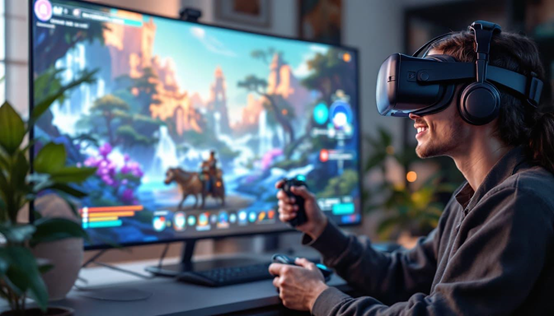
VR entertainment is no longer limited to gaming. Several content categories have emerged as major growth areas.
Gaming
VR gaming remains the largest segment. Action games, rhythm games, simulations, and multiplayer experiences continue to drive headset adoption.
Virtual concerts and events
Artists and event organizers are creating virtual venues where fans can attend performances from anywhere in the world.
Educational and documentary content
Museums, universities, and media companies use VR to create immersive learning experiences.
Adult VR entertainment
This category has expanded rapidly as headset technology has improved. Many users seek more immersive viewing experiences compared to traditional video formats.
Why Adult VR Content Is Growing
The growth of VR adult entertainment is tied to the same factors driving VR adoption overall: immersion, realism, and privacy.
Major growth factors
Sense of presence: Users feel more connected to the virtual environment.Improved headset quality: Higher resolution and better tracking create a more realistic experience.
Private viewing. VR is typically consumed through a personal headset rather than a shared screen.
Interactive features: Some experiences allow limited user interaction within virtual environments.
As a result, platforms focused on immersive VR video libraries have attracted significant interest from adult entertainment audiences.
Choosing the Right VR Headset
A good VR experience depends heavily on the headset. Different devices target different budgets and use cases.
Entry-level options
Standalone headsets are popular because they do not require a gaming PC. They are easy to set up and ideal for streaming VR videos.
Mid-range options
These devices offer better displays, improved comfort, and stronger processing power.
High-end PC VR
PC-connected headsets provide the highest visual fidelity and tracking accuracy, making them ideal for demanding games and premium immersive content.
Important features to compare
Display resolution
Refresh rate
Comfort for long sessions
Wireless capability
Content ecosystem
Controller tracking quality
The Importance of Resolution in VR
Resolution matters far more in VR than on a normal monitor because the screen is positioned very close to the eyes.
Lower resolution problems
Visible pixels
Blurry text
Reduced realism
Eye strain during long sessions
Higher resolution benefits
Sharper images
Better depth perception
More realistic environments
Improved comfort
This is one reason newer headsets have significantly improved the quality of immersive video experiences.
Mixed Reality and the Next Step
Virtual reality is increasingly blending with mixed reality (MR), which overlays digital content onto the real world.
What MR adds to entertainment
Virtual screens placed in real rooms
Interactive holographic elements
Social experiences that combine physical and digital spaces
Easier multitasking while wearing a headset
Many industry analysts believe MR will become a standard feature in future entertainment devices.
Privacy Considerations in VR
As VR becomes more personal, privacy becomes more important.
Data that headsets may collect
| Data Type | Why It Matters |
| Head movement | Can reveal attention patterns |
| Hand tracking | Records interaction behavior |
| Eye tracking | May reveal interests and focus areas |
| Voice input | Contains personal conversations |
| Usage history | Shows viewing habits and preferences |
Simple privacy tips
Review headset permissions regularly.
Use strong account passwords.
Enable two-factor authentication when available.
Understand what data the platform stores.
Be cautious when using social VR spaces with strangers.
These practices are especially important for users consuming sensitive or adult-oriented content.
Creating a Better Home VR Setup
You do not need a dedicated gaming room to enjoy VR, but a few adjustments can improve the experience dramatically.
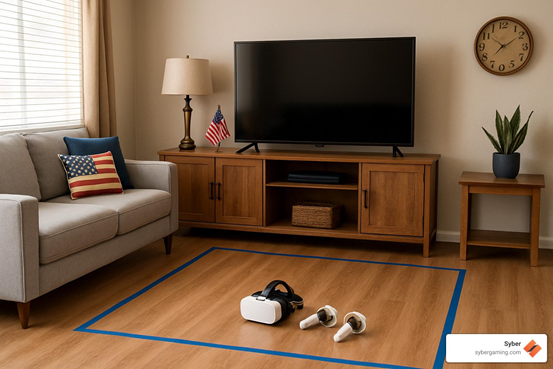
Ideal setup checklist
Clear at least 2m × 2m of space
Remove fragile objects
Ensure good ventilation
Use a comfortable floor surface
Keep the headset charged
Use headphones for better immersion
Comfort becomes increasingly important during longer viewing sessions.
Common Mistakes New VR Users Make
Many first-time users expect VR to feel exactly like reality. While the technology is impressive, there is still an adjustment period.
Frequent beginner mistakes
Using the headset for too long on the first day
Ignoring comfort settings
Using incorrect IPD (interpupillary distance)
Watching low-quality VR video sources
Not taking breaks when experiencing motion discomfort
Starting with shorter sessions usually leads to a much better long-term experience.
The Future of VR Entertainment
Several trends are likely to shape the next five years.
1. Higher visual realism
Displays are becoming sharper, brighter, and more color accurate.
2. Better social interaction
Avatars, facial tracking, and shared virtual spaces will make VR feel more connected.
3. AI-generated environments
Artificial intelligence will help create dynamic virtual worlds that respond to users in real time.
4. Faster wireless streaming
Improved Wi‑Fi standards and cloud rendering will reduce the need for powerful local hardware.
5. More specialized content platforms
Entertainment categories, including gaming, education, live events, and adult VR, will continue developing dedicated ecosystems.
Is VR Worth It in 2026?
For many users, the answer depends on how they consume entertainment.
VR is probably worth it if you:
Enjoy gaming
Watch a lot of video content
Want a more immersive experience
Attend virtual events
Are curious about emerging technology
VR may not be worth it if you:
Prefer quick, casual viewing
Dislike wearing headsets
Have limited space
Are sensitive to motion discomfort
The good news is that entry-level hardware has become much more affordable than it was just a few years ago.
Final Thoughts
Virtual reality is no longer a niche technology reserved for gamers and tech enthusiasts. It has become a legitimate entertainment platform that supports movies, live events, interactive experiences, and adult-oriented immersive content. As headsets become lighter, sharper, and more affordable, VR is likely to play an increasingly important role in how people spend their digital leisure time.
Whether you are interested in gaming, virtual concerts, educational experiences, or immersive video entertainment, exploring a dedicated VR platform such as VSpy is one of the easiest ways to see how far the technology has evolved and why so many users are embracing the next generation of immersive media.