

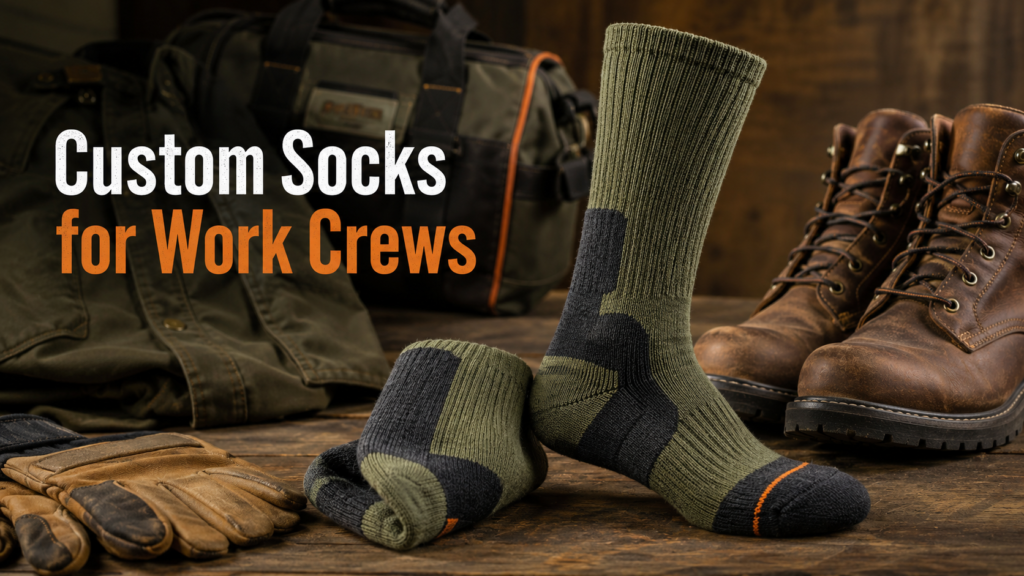
Trade teams and work crews often need apparel that supports long hours. Socks may not be the most visible item, but they can affect comfort during daily work, especially when workers wear boots or stand for extended periods.
A good work crew sock should focus on comfort, fit, durability, and easy care.
Match Socks With Footwear
Work crews may wear boots, safety shoes, or heavy sneakers. The sock should not be too thin or too thick. A thin sock may not provide enough comfort, while a very thick sock may make footwear tight.
Crew socks are often practical because they provide more coverage and reduce friction around the ankle.
For work-related orders, custom socks with logo should be planned around the footwear and daily work setting.
Use Strong but Comfortable Materials
Work socks need durability. Nylon or polyester support fibers can improve strength, while spandex helps the sock stay in place. Cotton can add softness, but too much cotton may hold moisture.
A balanced blend is usually safer than choosing material only by softness.
Keep Branding Functional
For work crews, a large decorative logo is usually less important than comfort. A small calf logo, cuff mark, or stripe in company colors can create identity without affecting wearability.
The design should not create discomfort inside shoes or boots.
Connect Socks With Other Work Accessories
Socks can be part of a simple work gear set with caps, beanies, gloves, or scarves. This is especially useful for colder seasons or outdoor crews.
For companies ordering multiple practical items, working with Fastsewing can help keep socks, caps, beanies, gloves, scarves, and other work accessories visually consistent.
Conclusion
Custom socks for trade teams should be practical first. Comfort, footwear compatibility, and durability matter more than complicated design. When planned well, socks can become a useful part of everyday work gear.